Adorable Valentine Boba Donut Embroidery Design: A Designer’s Review
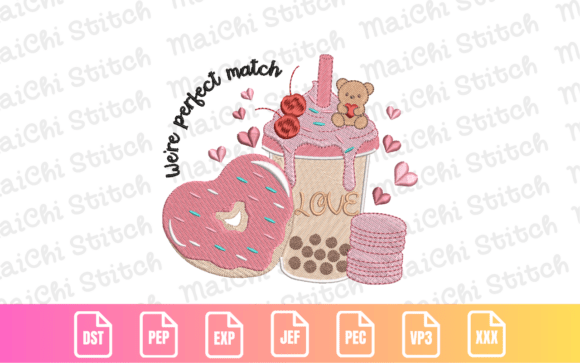
Let’s talk about this Valentine Boba Donut design. Opening the file, the immediate impression is sweet overload in the best possible way. It’s not just a Valentine’s Day motif; it’s a full, charming scene. That pink bubble tea topped with cherries, paired with the heart-shaped donut and the tiny, almost bashful-looking teddy bear—it creates an instant mood of playful affection. The layout feels balanced, not crowded, with each element having its own space to shine. This isn’t a generic heart; it’s a specific, conversation-starting piece of art.
The Personality Fit: Where This Design Belongs
In my mind, I’m immediately picturing it on a custom baby blanket or a little girl’s sweater. The whimsical, almost storybook quality makes it perfect for nursery decor or personalized children’s gifts. But it also has a strong boutique appeal. Imagine this embroidered on the corner of a linen pillow cover for a Valentine’s-themed bedroom, or as a standout feature on a canvas tote bag for a small shop selling cute lifestyle goods. For Etsy sellers and creative entrepreneurs, this design offers high giftability and recognition. It tells a visual story that buyers connect with instantly.
I’m thinking about a real project: a custom order for an embroidered sweatshirt from a client wanting a unique Valentine’s gift for their partner. The Valentine Boba Donut design feels like a perfect candidate. It’s romantic without being cliché, cute without being juvenile, and detailed enough to feel like a truly special, handmade product. That tiny teddy bear adds a layer of personalization—it could even be interpreted as a little mascot. In terms of brand consistency for a craft business, if your shop’s aesthetic is playful, modern, and sweet, this embroidery file would be a cohesive asset.
Practical Stitching: Performance on Real Products
Moving from the screen to the hoop, there are practical considerations. The design’s charm comes from its details: the cherries on the boba, the bear’s features, the heart shape of the donut. These elements require clean stitching to maintain clarity. On stable, medium-weight fabrics like cotton twill for tote bags, cotton quilting fabric for pillows, or sturdy sweatshirt material, I anticipate excellent results. The fill stitch areas for the drink and donut should provide a smooth, solid base.
However, this is where your embroidery machine settings and preparation become crucial. On textured fabrics like certain knits or on thin, stretchy fabrics, those small details could get lost or distort. Testing on a scrap first is non-negotiable. I’d be particularly mindful using this on a curved surface like a cap—the design’s width and the potential density in the boba cup area might require careful hooping and stabilizer choice. For dark fabric backgrounds, thread color contrast is key; you’d want to ensure the pink and lighter shades pop sufficiently.
Craft Business Value: From File to Finished Product
For small business owners and apparel decorators, the transition from the digital embroidery file to a salable finished product is the core journey. This design elevates a basic item. A simple tea towel becomes a boutique kitchen accessory. A plain apron transforms into a fun, holiday-themed gift. The visual appeal is high, which directly impacts perceived product value and customer trust. A well-embroidered Valentine Boba Donut on a product photograph for your Etsy listing or printable mockup suggests care and quality.
It’s also versatile across product types. Beyond apparel, think of patches. This design would make a fantastic, stand-alone embroidered patch, appealing to a younger audience for bags or jackets. For commercial embroidery projects, like a run of items for a small boutique, the design’s clear, contained shape makes it efficient to batch produce. Its theme is seasonal but not narrowly limited to February 14th—it speaks more broadly to sweetness and affection, giving it a slightly longer shelf life in a product line.
Points of Caution for Professional Use
My designer notes always include a section for careful application. With the Valentine Boba Donut, attention should go to small hoop sizes. If you intend to stitch it very small, perhaps under 3 inches, those delightful details—the bear’s face, the cherry stems—might become too dense or blur. It’s a design that benefits from a bit of scale to breathe. Also, on products destined for frequent washing, like baby clothes or kitchen linens, securing those smaller satin stitch elements with proper stabilizer during the embroidery process is vital for longevity.
Another professional habit: checking the design in black and white mockups. This helps assess the pure shape and composition without color bias. Does the layout hold its interest? For the Valentine Boba Donut, the answer is yes—the central drink and companion donut create a strong, cohesive unit. This is good news for branding; the design’s silhouette is recognizable, which is important for logo-like applications or consistent branding across a product range.
Final Thoughts Before Hooping
Before I load this into my machine for a real client project—say, that Valentine’s sweatshirt—my final checklist runs through a few key points. I’ll confirm the licensing terms for the embroidery file to ensure my commercial use is clear. I’ll plan my thread colors, perhaps testing a slightly lighter pink if the base fabric is dark. I’ll select a stabilizer appropriate for the sweatshirt’s stretch. And I’ll mentally map the stitch path, noting areas like the boba cup that might have higher density to ensure my machine handles it smoothly.
The Valentine Boba Donut embroidery design, from a professional’s standpoint, is a strong asset. It has a distinct personality that translates into tangible product appeal. It encourages a handmade, thoughtful presentation. For crafters, hobbyists, and makers, it offers a joyful project. For entrepreneurs and sellers, it provides a design with commercial potential for holiday gifts, personalized products, and small shop merchandise. Its success hinges, as always, on the maker’s skill in translating the digital file into a beautifully stitched reality. With proper testing and setup, this adorable scene is poised to sweeten a lot of real-world projects.