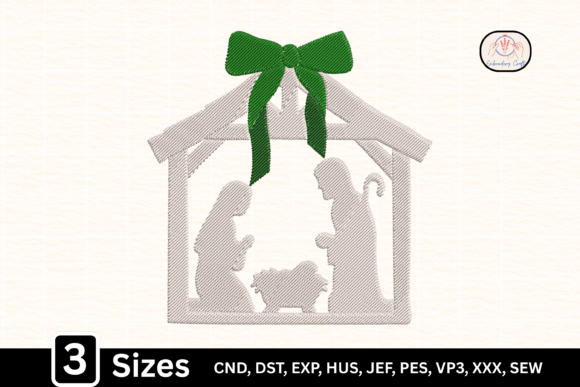
Mary Joseph Jesus Nativity Coquette Embroidery Review
As a designer who handles a lot of seasonal custom orders, I’m always looking for embroidery files that balance decorative appeal with real-world stitching reliability. When the Mary Joseph Jesus Nativity Coquette design popped up on Creative Fabrica, I knew I needed to evaluate it for this year’s Christmas projects. This isn't a generic product description; it's my honest take after considering it for real handmade products and commercial use.
First Impressions: A Silhouette with Sentiment
The visual mood of the Mary Joseph Jesus Nativity Coquette is immediately clear. It presents the holy family as a graceful, interconnected silhouette. The ‘coquette’ styling suggests a certain delicate, ornamental personality, which is a charming departure from more traditional, blocky nativity scenes. The detail level is thoughtful—it relies on clean outlines and subtle interior details to define Mary, Joseph, and Jesus without becoming overly complex. This makes it feel both decorative and deeply symbolic, perfect for projects where you want the embroidery to be a focal point of meaning, not just decoration.
For my workflow, this design naturally fits a specific niche: handmade gifts and boutique merchandise where the story matters. I pictured it instantly on a keepsake baby blanket, a festive kitchen towel, or the center of a pillow cover meant for a nursery or holiday decor. It has that giftability factor—it feels special.
Practical Performance on Real Projects
Let’s talk about how the Mary Joseph Jesus Nativity Coquette might perform when the needle starts moving. For custom apparel like sweatshirts or aprons, the silhouette-based design is a plus. Large areas of solid fill stitch can be tricky on stretchy fabrics, but a design that uses clean outlines and potentially more running stitch or lighter satin stitch areas can be more stable. However, this depends entirely on the actual stitch construction in the file—a crucial point to verify on the product page.
For smaller items like caps or patches, the scale becomes critical. The product details will specify the hoop size, and you must check that. Tiny lettering or extremely dense stitch areas in a small design can lead to thread breaks or puckering, especially on curved cap surfaces. My advice is always to test on scrap fabric of the same type you’ll use for the final product. For a design like this, testing on both a light and a dark fabric scrap is wise to judge thread color contrast and see how the silhouette reads.
Items that need frequent washing, like kitchen towels or baby items, demand robust stitching. A design with good stitch density and proper stabilizer use will hold up. The interconnected figures in the Mary Joseph Jesus Nativity Coquette could mean some layered details; inspecting these small areas after your test stitch is essential to ensure they are locked in and won’t snag.
Affecting Product Value and Customer Trust
Using a well-executed design from a trusted source like Creative Fabrica directly affects your product’s perceived value. For Etsy sellers and craft fair vendors, a clean, sentimentally powerful embroidery like this elevates a simple tote bag or pillow into a meaningful Christmas gift. The visual appeal is strong for product photography—the silhouette is clear and likely looks excellent in mockups, which helps with customer engagement online.
Brand consistency for creative entrepreneurs comes from offering quality. A design that stitches out cleanly, without constant tweaking or thread issues, builds buyer trust. They receive a professional-looking handmade product. The Religion Faith category here is not just a label; it’s the core of the design’s appeal. It resonates with a specific audience looking for the true meaning of Christmas in their decor, which can be a powerful niche for small business owners.
Critical Embroidery Notes Before You Hoop
Before using any digital embroidery file commercially, your process should be meticulous. For the Mary Joseph Jesus Nativity Coquette, and any design, follow these steps:
- Check the Creative Fabrica product page thoroughly. Confirm all file details. What formats are included? What is the stated hoop size? This information is vital for machine compatibility.
- Review the licensing terms. Before selling finished items, understand the usage rights. This protects your business.
- Always run a test stitch on scrap fabric. Use the same stabilizer you plan for the final project. This reveals potential issues with stitch density, small details, or tension.
- Plan your thread colors. The silhouette might work beautifully with a single dramatic color on light fabric, or a light thread on dark fabric. Your test will help decide.
- Consider the end product. For a dense sweatshirt, you might need additional stabilizer. For a delicate baby blanket, choose a soft backing.
Is This Design Worth Using?
From a professional embroidery designer’s point of view, the Mary Joseph Jesus Nativity Coquette has significant potential. Its aesthetic is on-target for seasonal handmade gifts and custom apparel. Its silhouette-based approach suggests it could be adaptable and stitch reliably if the file construction is sound. However, its worth is entirely dependent on those practical, un-seen factors: the actual stitch types, the density, and the provided hoop sizes.
My final evaluation is this: if the product details on Creative Fabrica confirm a sensible hoop size and file format for your machine, and your test stitch on your target material comes out clean with good detail retention, then this design is a strong candidate. It can add meaningful value to Christmas-themed tote bags, sweatshirts, home decor, and personalized gifts. It has the visual appeal to enhance your product photography and the symbolic weight to connect with customers. But the foundation of that success is always in the pre-work—checking the details and testing diligently. That’s what turns a promising digital embroidery file into a trusted asset for your creative business.