Mystical Hand Embroidery Design Review for Business
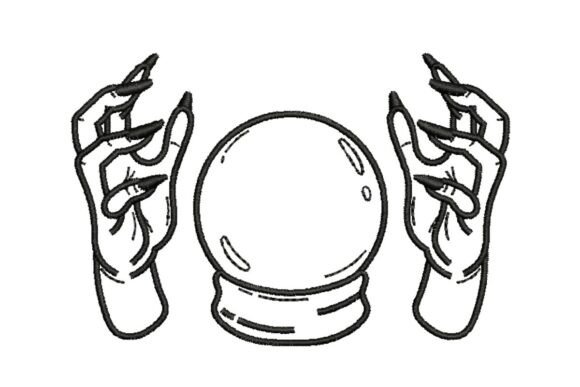
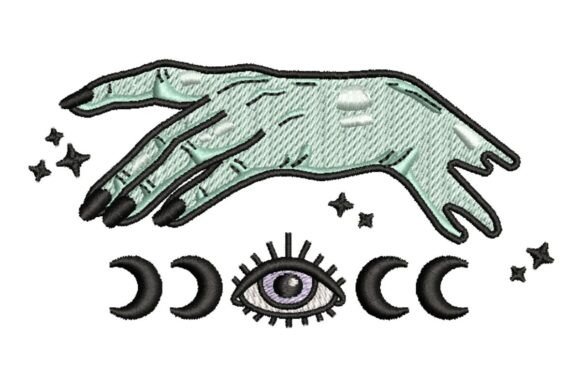
From the perspective of a professional embroidery designer, reviewing a new file for potential business merchandise is a critical step. Today, I’m examining the Mystical Hand with All-Seeing Eye and Moon Phases Embroidery Design. This piece falls into the Religion Faith and Embroidery category, but its application for commercial and branded use is far broader. My review focuses on its viability for small business owners, from apparel decorators to handmade brands, looking to create patches, uniforms, caps, and other merch.
First Impression: Visual Personality for Branding
The title and description immediately evoke a sense of powerful magic and cosmic insight. As a design for business use, my first impression is that it leans towards a bold, mystical, and premium aesthetic. The combination of a stylized hand, the all-seeing eye, and moon phases creates a intricate, symbolic piece. It doesn’t feel overly playful or rustic; instead, it carries a weight of elegance and meaning. For a small business, this offers a strong visual identity—it’s not merely decorative. It communicates a brand that values depth, intuition, or perhaps a connection to natural cycles, which could resonate perfectly with businesses like a creative studio, a boutique specializing in spiritual goods, a holistic café, or a florist with an artistic, cosmic theme.
Practical Performance in Business Applications
Let’s translate that visual impact into real-world small business merch. The key question is: how does this embroidery design perform on actual products?
Embroidered Patches and Product Labels
This is likely one of the strongest applications. As a standalone embroidered patch, this design could serve as a superb brand accent. It could be applied to tote bags, aprons, or even used as a product label sewn onto handmade items from an Etsy shop. The detailed elements—the hand, eye, and moon phases—would need to be evaluated at a small size to ensure clarity. A patch version would make for excellent customer gifts or event merch, adding significant perceived value.
Apparel for Staff and Branding
For staff uniforms, consider using it as a chest logo or a sleeve detail on work shirts. On an apron for a bakery or café with a mystical brand name, it would be a striking focal point. For cap embroidery, the design’s central composition could work well on the front, though the curved surface and potential size reduction require careful testing. The design’s inherent detail means stitch density must be managed to avoid a stiff, heavy feel on lighter fabrics like polo shirts.
Tote Bags and Custom Apparel
As a tote bag design, this would create a premium, artistic product. It elevates a simple bag into a statement piece, ideal for a boutique’s merchandise line. The same applies to other custom apparel like hoodies or crew necks sold by a craft business.
Considerations for Careful Application
While versatile, some applications demand extra attention. Always test the digital embroidery file in these scenarios before full production.
- Small Patch Sizes: The moon phases and eye detail may lose definition if the design is minimized too much for a tiny product label.
- Cap Fronts & Curved Surfaces: The design’s integrity on curved surfaces depends on expert digitizing to compensate for distortion.
- Dark Uniforms: Thread color contrast is paramount. A light or metallic thread palette might be needed to make the design pop on dark fabrics.
- High-Wash Items: For aprons or work shirts needing frequent laundering, a robust stitch structure and quality threads are essential for longevity.
- Textured Fabric: On materials like canvas or heavy cotton for tote bags, the design might need adjusted stitch types to sit cleanly.
Impact on Brand Identity and Customer Perception
Using the Mystical Hand with All-Seeing Eye and Moon Phases Embroidery Design as a consistent brand asset can profoundly affect your business identity.
It fosters brand recognition through a unique, memorable symbol. For a customer, seeing this design on a staff apron, a shop tote, and the product packaging creates a cohesive, professional visual consistency. It suggests a brand that cares about its presentation, elevating the perceived value of your handmade products. The mystical theme can build a narrative, engaging buyers who connect with that aesthetic, thereby deepening customer trust and loyalty. It transforms generic merchandise into branded artifacts that tell your story.
Essential Designer Notes Before Production
Before running this design for any commercial embroidery project, follow these practical steps.
- Test in Black and White First: Run a simple version to evaluate the core stitch structure and outline clarity before committing to a full color palette.
- Check Small Patch Size Performance: Hoop it at the smallest intended size to ensure the moon phases and eye remain distinct.
- Review Thread Color Contrast: Plan your color scheme against your typical fabric colors—light on dark or dark on light.
- Inspect Spacing and Stitch Density: Ensure elements aren’t too crowded, which can cause puckering, and that density is suitable for the intended fabric weight.
- Confirm Hoop Size Compatibility: Verify the design fits within the standard hoop sizes you use for your production items like caps or bags.
- Test on Real Fabric: Always stitch a sample on the actual fabric you’ll use—a denim apron, a canvas tote, a polo shirt—using the proper stabilizer.
- Create a Printable Mockup for Client Approval: If designing for a client’s brand, a mockup helps visualize the finished product.
- Compare Beside Other Design Assets: See how it complements your existing logo or typography to maintain a unified brand look.
- Confirm Commercial Licensing: Crucially, verify the licensing terms of the embroidery file allows for business use on merchandise you intend to sell.
In conclusion, the Mystical Hand with All-Seeing Eye and Moon Phases Embroidery Design presents a compelling opportunity for small businesses seeking a distinctive, symbolic brand mark. Its success hinges on meticulous testing and adaptation to specific applications—from patches to apparel. When executed with care, it can become a powerful asset that enhances your brand identity, adds value to your merchandise, and engages your customers on a deeper, visual level.